

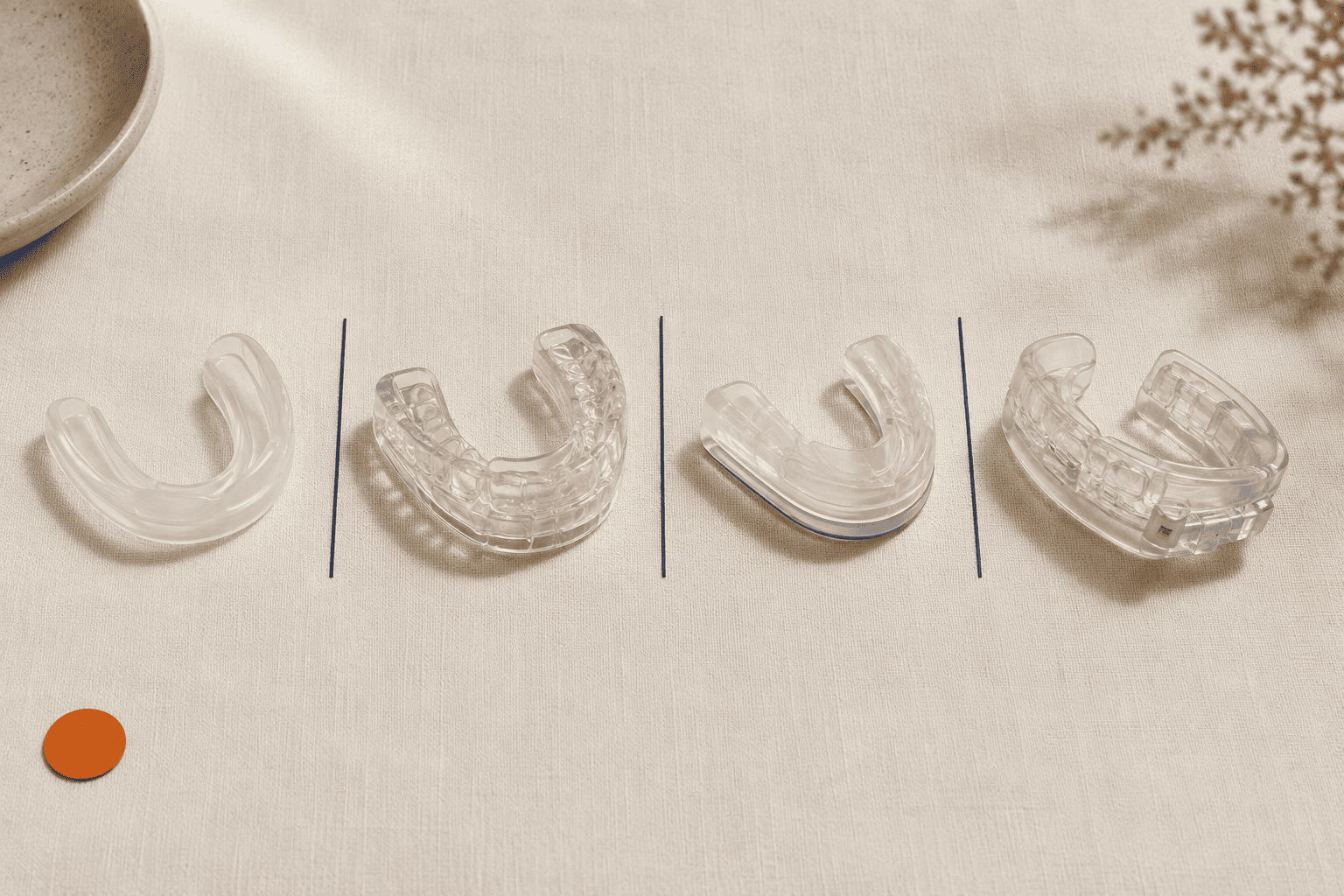
Not all nightguards are the same. Soft, hard, dual-laminate, mandibular advancement device — different tools for different jobs, and the wrong one for your case can make TMJ worse. Here's the plain-English decision guide.
Comparison across four common nightguard categories with case-fit guidance and where a daytime resting-posture appliance layers in.

The Four Nightguard Categories
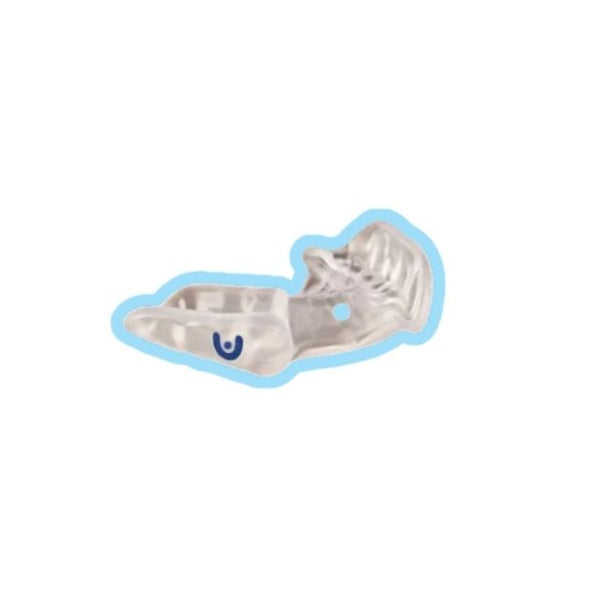
Soft nightguard.
2mm flexible material. Best for mild-to-moderate bruxism. Comfortable but wears faster.
Example: Night Pal · $114
Hard acrylic guard.
Rigid material. Best for heavy grinders. Less comfortable, more durable, may worsen jaw pain in some cases.
Provider-fitted through dentist
Dual-laminate.
Soft inner + hard outer. Compromise design. Comfortable and durable but more complex to fit.
Provider-fitted through dentist
Mandibular advancement device (MAD).
Prescribed for mild-to-moderate sleep apnea. Repositions lower jaw forward during sleep. Different class from bruxism guards.
Dental sleep medicine dentist
Full Comparison
Decision Framework
Choose Night Pal (soft) if:
- You have mild-to-moderate bruxism, TMJ symptoms, or morning jaw fatigue.
- You want a patented custom-fit soft guard at accessible cost.
- You're layering with Adult Spot Pal for the daytime substrate work. Nightguard cycling guide →
Consider hard or dual-laminate if:
- You're a documented heavy grinder wearing through soft guards.
- Your dentist has assessed and recommended based on your specific pattern.
- You're not concerned about the trade-off between durability and comfort.
Discuss MAD with sleep physician if:
- You have documented mild-to-moderate OSA.
- You can't tolerate CPAP.
- Your sleep physician has assessed and prescribed. Sleep apnea treatment options →
The Layered Approach
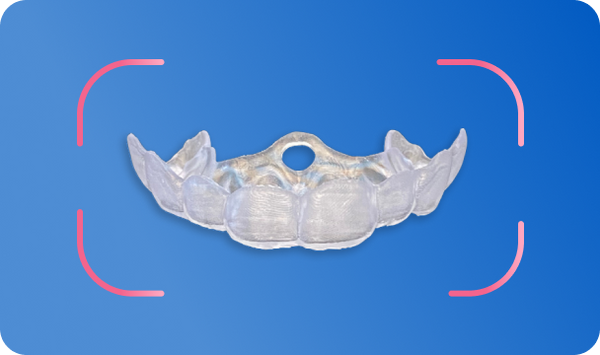
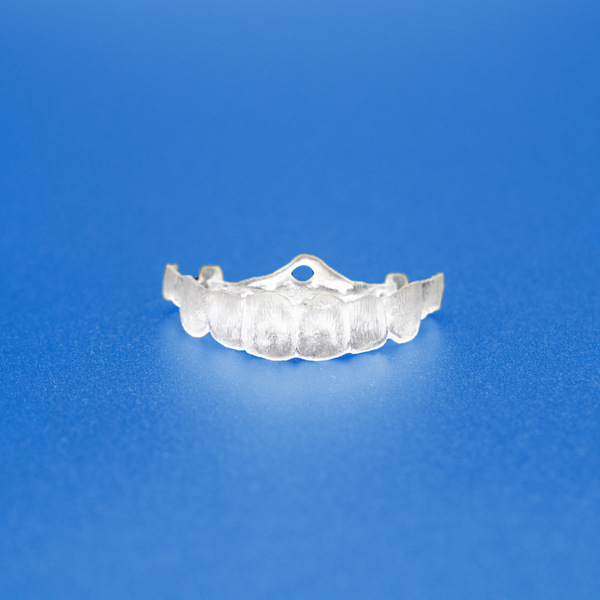
Any nightguard protects the teeth from active bruxism. What none of them do is address the underlying tongue-posture and airway pattern driving the clench. That's where Adult Spot Pal comes in — the patented daytime resting-posture appliance that retrains the substrate. Pair Night Pal + Adult Spot Pal for the full stack. Full TMJ pillar →
"Had a hard acrylic guard for years — it protected my teeth but my jaw was worse. Switched to Night Pal (soft) plus Adult Spot Pal for daytime. Nine months later my TMJ specialist agreed we could stop the routine follow-ups. Same protection, no more compensating for the guard itself."
The Full Stack
Common Questions
Are hard guards bad for TMJ?
Not universally, but some TMJ patients find hard guards increase clench force by giving the jaw something firmer to work against. Case-specific. Discuss with your dentist.
Do I need a dentist to prescribe a nightguard?
Custom-fit guards are typically dispensed by dentists. Night Pal is custom-fit at home through an impression kit process. Store-bought stock guards are not custom-fit and generally underperform.
Can I wear Night Pal and a MAD together?
No — different device classes for different jobs. A MAD is prescribed apnea treatment; wearing both simultaneously wouldn't work. Discuss with your sleep physician if you have both conditions.
How long does Night Pal last?
Soft guards typically last 1-3 years depending on wear. Heavy grinders replace more often. Signs of replacement: visible wear, holes, thinning.
Insurance coverage on nightguards?
Dental insurance often covers custom guards. Night Pal typically out-of-pocket but competitive versus dentist-fabricated guards. HSA/FSA may cover.
Share:
Bedwetting Past Age 5: The Airway Connection Nobody Mentions
Grip Strength & Jaw Clench: The CNS Overflow Lifters Miss