


TMJ pain is not a jaw problem. It's a compensation pattern. Somewhere upstream — tongue, airway, posture — the system is asking the jaw to hold what it wasn't designed to hold.
Nightguards buffer the damage. They don't fix the mechanism. Here's what actually does — and where the patented resting-posture appliance fits into the protocol.

Why Most TMJ Treatments Manage The Damage Instead Of The Cause
A conventional TMJ workup produces a nightguard, ibuprofen, and jaw exercises. Sometimes physical therapy. Sometimes Botox. These are all defensible — they buffer, they reduce load, they interrupt the pain cycle. What they don't do is address the upstream question: why is the jaw over-recruiting in the first place?
The myofunctional-therapy literature over the last two decades has documented three upstream drivers that most conventional workups don't screen for:
- Low resting tongue posture. When the tongue doesn't seal against the palate, the jaw takes over structural work the tongue-palate seal should hold. That over-recruitment shows up in daytime clench and nighttime grind.
- Airway compromise. Mouth-open sleep drops the jaw and pulls the tongue back into the airway. The nervous system's response is to clench forward to protect the airway — a protective reflex that presents clinically as bruxism.
- Forward head posture. The mandible articulates through the postural chain. Head-forward posture (from screen work, phone use, mouth breathing) shifts jaw mechanics and loads the TMJ asymmetrically.
If none of the three are addressed, a nightguard is doing exactly what it's supposed to — protecting the teeth from the grinding pattern — but the pattern itself keeps firing. That's why so many TMJ patients cycle through appliances without meaningful improvement in the underlying pain. The hidden causes of TMJ disorders →
Signs Your TMJ Is Actually A Tongue-Posture Case
Not every TMJ case is upstream from posture — some are structural, some are traumatic, some are truly joint-mechanical. But if two or more of these are present, myofunctional assessment should be on the differential before another nightguard.
Morning jaw fatigue and tension headaches.
Wake up with tight temples, sore masseters, or a dull frontal headache. Signals a night pattern of clench or grind that a passive nightguard alone hasn't resolved.
You breathe mouth-open at night.
Dry mouth in the morning, partner reports snoring, or you wake unrefreshed. Airway compensation and TMJ pain are frequently the same pattern seen from two clinical angles.
You catch yourself clenching during focused work.
Screen work, concentration, driving — the jaw locks without you noticing. This is the daytime signature of a tongue that isn't holding the palate.
Ear pressure, ringing, or clicking when you open wide.
The TMJ shares fascia with the middle ear. Referred pressure and audible clicks on opening are classic markers of joint disc dysfunction, often downstream from chronic clench.
Neck tension that isn't from posture alone.
Chronic upper-cervical and suboccipital tension that PT can't fully unwind. The masseter-neck fascia link is what carries the pattern below the jaw.
You've cycled through nightguards without resolution.
Two or more appliances, still symptomatic. The nightguard is doing its job — the pattern upstream of it isn't being addressed.
The Five Clinical Systems Behind TMJ Pain
The temporomandibular joint doesn't operate in isolation — it sits at the intersection of five clinical systems, and TMJ pain is almost always the downstream signal of at least one of them being out of alignment.
1. Tongue-palate seal & jaw resting position
The mandible has a neutral resting position — teeth slightly apart, lips closed, tongue against the palate. When the tongue drops to the floor of the mouth, the jaw compensates by holding what the tongue-palate seal was supposed to hold. That compensation, held for hours a day, is the mechanical origin of chronic clench. Tongue posture: the complete guide →
2. Nocturnal clench & grind (bruxism)
Sleep bruxism is not a habit — it's a protective motor pattern generated in the brainstem, often in response to airway compromise. The jaw is being recruited to hold the airway open. Treating the airway (nasal breathing, tongue posture) treats the pattern; treating only the teeth manages the aftermath. Understanding & treating teeth grinding →
3. Airway compromise & mouth breathing
Mouth-open sleep drops the jaw, retracts the tongue, and narrows the pharyngeal airway. The nervous system's compensatory response is to clench forward, protecting airway patency. In this framing, TMJ pain and mild airway compromise are often the same pattern presenting at two different clinical doors. Mouth breathing: the complete guide →
4. Postural chain & forward head
The mandible articulates through the cervical spine and postural chain. Forward head posture (increasingly common from screen work) shifts the trajectory of jaw closure and loads the TMJ asymmetrically. This is why TMJ patients often have upper-cervical tension that PT alone can't unwind — the mandibular pattern is holding it in place. Jaw misalignment: causes & solutions →
5. Daytime habit patterns
Nail biting, chewing on one side, phone-tucking under the chin, gum chewing for hours — every daytime habit that recruits the jaw asymmetrically adds load to a joint already compensating for upstream posture. Habit correction alone rarely resolves TMJ, but combined with rest-posture work it removes the reinforcement. Daily habits that worsen TMJ →
A Layered Protocol That Treats The Cause
The standard TMJ protocol is one appliance and manage-the-symptoms. A cause-directed protocol adds three upstream layers — and this is where the layered Spot Pal system fits into a real clinical workup.
Layer 1 — Protect the teeth at night.
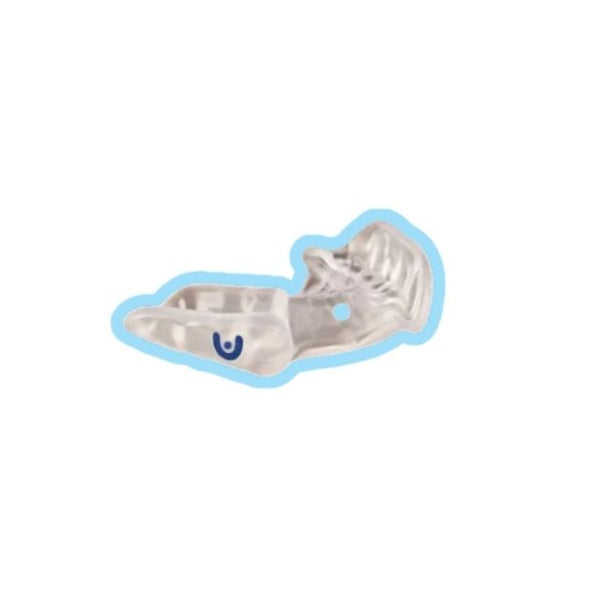
Night Pal — custom-fit soft nightguard, 2mm. Prevents the enamel damage and dental fracture that unmanaged bruxism causes. This is the buffer layer, and it's non-optional if grinding is present. Full TMJ overview →
Layer 2 — Retrain daytime rest posture.
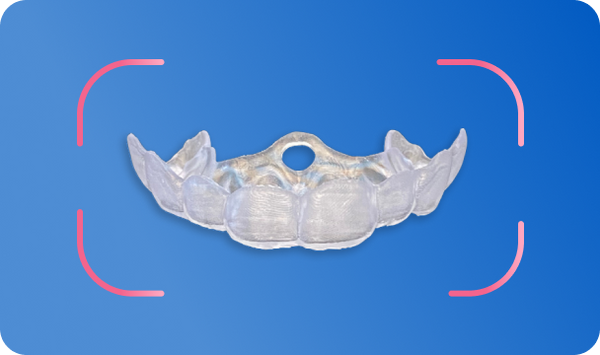
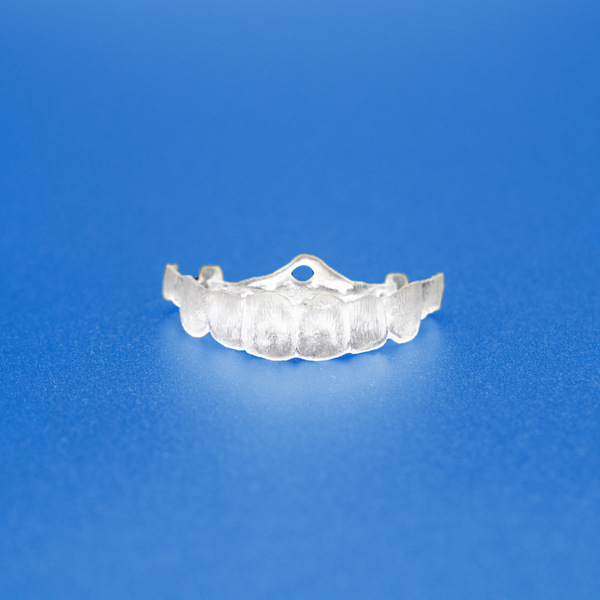
Adult Spot Pal — patented resting-posture appliance. Trains the tongue-palate seal that keeps the jaw off structural duty. Worn during focused work, reading, or screen time — 30-60 minutes at a stretch — until rest posture becomes autonomous. This is the layer most conventional TMJ workups skip.
Layer 3 — Habit correction.
Awareness work on daytime clench. Removing one-sided chewing, gum chewing, phone-tucking. Standard PT-adjunct work paired with the rest-posture training makes each habit change stick. Myofunctional therapy as a TMJ modality →
Layer 4 — Reinforce with training.
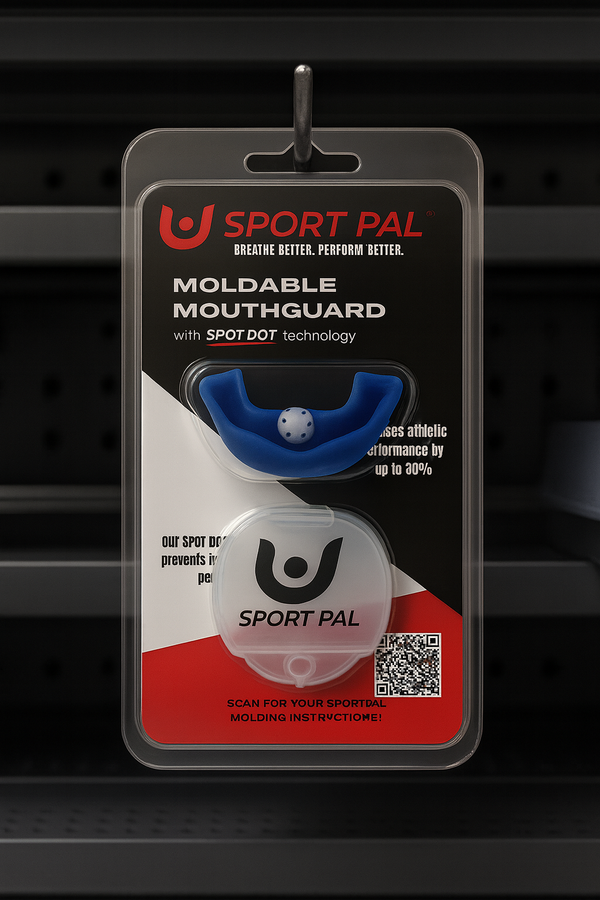
Boil & Bite Sport Pal during workouts and mobility work reinforces the tongue-palate seal under mild load. For patients whose daytime clench spikes during exercise, this is the layer that consolidates the pattern.
Full stack. The Gym & Bedroom System pairs Night Pal and Adult Spot Pal — the exact two layers most TMJ patients are missing from their current appliance-only protocol.
Shop Gym & Bedroom · $250When TMJ Pain Is Not A Tongue-Posture Case
Not every case is upstream. If any of these apply, refer to an orofacial pain specialist or oral surgeon before starting myofunctional work:
- Recent trauma to the jaw, head, or neck — whiplash, sports injury, dental procedure.
- Systemic inflammatory disease — rheumatoid arthritis, lupus, ankylosing spondylitis presenting with TMJ.
- Locked jaw that won't open past 20mm or won't close normally — this is disc displacement without reduction and needs imaging.
- Progressive facial asymmetry or bite change over months — signals condylar pathology that requires imaging.
- Neurological pain patterns — trigeminal neuralgia, atypical facial pain — need neurology, not myofunctional protocol.
For the majority of cases that don't hit those red flags, though, the four-layer protocol addresses the mechanism.
"Three nightguards, two years, still waking up with headaches. My dentist finally sent me to a myofunctional therapist who put me in Adult Spot Pal during work hours. First month I thought nothing was happening. Second month my partner said I'd stopped grinding at night. Third month the headaches stopped. Nothing changed except where my tongue was resting."
The Layered System
Common Questions
Do I still need a nightguard if I'm working on tongue posture?
Yes, especially in the first 3-6 months. Nightguards protect the enamel and dental structures from active grinding while the rest-posture retraining is still emerging. Discontinuing the nightguard is a decision to make with your dentist after a sustained reduction in bruxism markers — worn dental cusps, morning jaw fatigue, partner-reported grinding sounds.
How long before I feel relief?
Most patients report awareness of the jaw's rest position within the first 1-2 weeks of Adult Spot Pal daytime use. Reduction in morning symptoms typically emerges at 4-8 weeks. Full resolution (or stable long-term reduction) usually takes 3-6 months as the neuromuscular habit consolidates. Individual variation is significant — traumatic-onset cases move slower than habit-onset cases.
Can I use Adult Spot Pal at night instead of my nightguard?
No. Adult Spot Pal is a daytime resting-posture appliance — worn awake for 30-60 minute stretches during focused work. Night Pal is the nighttime device, designed for the sleep-clench pattern. They work together, not interchangeably. Wearing Adult Spot Pal overnight is neither indicated nor recommended.
My dentist says TMJ is structural — is myofunctional work still worth trying?
Depends on the structural finding. If imaging shows disc displacement, condylar erosion, or systemic joint disease, the underlying pathology needs specialist care first. If the "structural" finding is that the joint is loaded asymmetrically because of habit-pattern clench, myofunctional protocol addresses the driver directly. Bring the four-layer framework to your dentist and ask whether the mechanism fits the case.
Is there a connection between TMJ and sleep issues?
Yes, a well-documented one. Mouth-open sleep drops the jaw and retracts the tongue, narrowing the airway. The nervous system's protective response — clenching forward to hold the airway open — presents clinically as bruxism. Patients with both TMJ symptoms and disrupted sleep should have both evaluated together; treating one without the other often leaves the pattern intact. Sleep apnea evaluation is warranted if snoring, morning fatigue, or witnessed apneas are present.
Can kids have TMJ, and does this protocol apply?
Kids can develop TMJ-adjacent symptoms — headaches, morning jaw soreness, popping. In this developmental window (roughly ages 5-14) the mechanism is often mouth-breathing pattern plus low tongue posture, and correction is more responsive than in adults because the palatal shape is still plastic. Referral to a pediatric myofunctional therapist is the standard first step; Spot Pal Junior often follows as the training tool.
Share:
Speech Development: The Complete Guide
Sleep & Airway: The Complete Guide