

Where your tongue rests when you're not thinking about it shapes your jaw, your airway, your speech, and your sleep.
Most adults are doing it wrong. Here's the complete guide — what tongue posture is, why it matters, the signs it's off, and how to train it in two to five minutes a day.

What Is Tongue Posture?
Tongue posture is where your tongue rests when your mouth is closed and you're not talking, chewing, or swallowing. That "default" position — the one your tongue holds twenty-plus hours a day — quietly runs more of your face and body than most people realize.
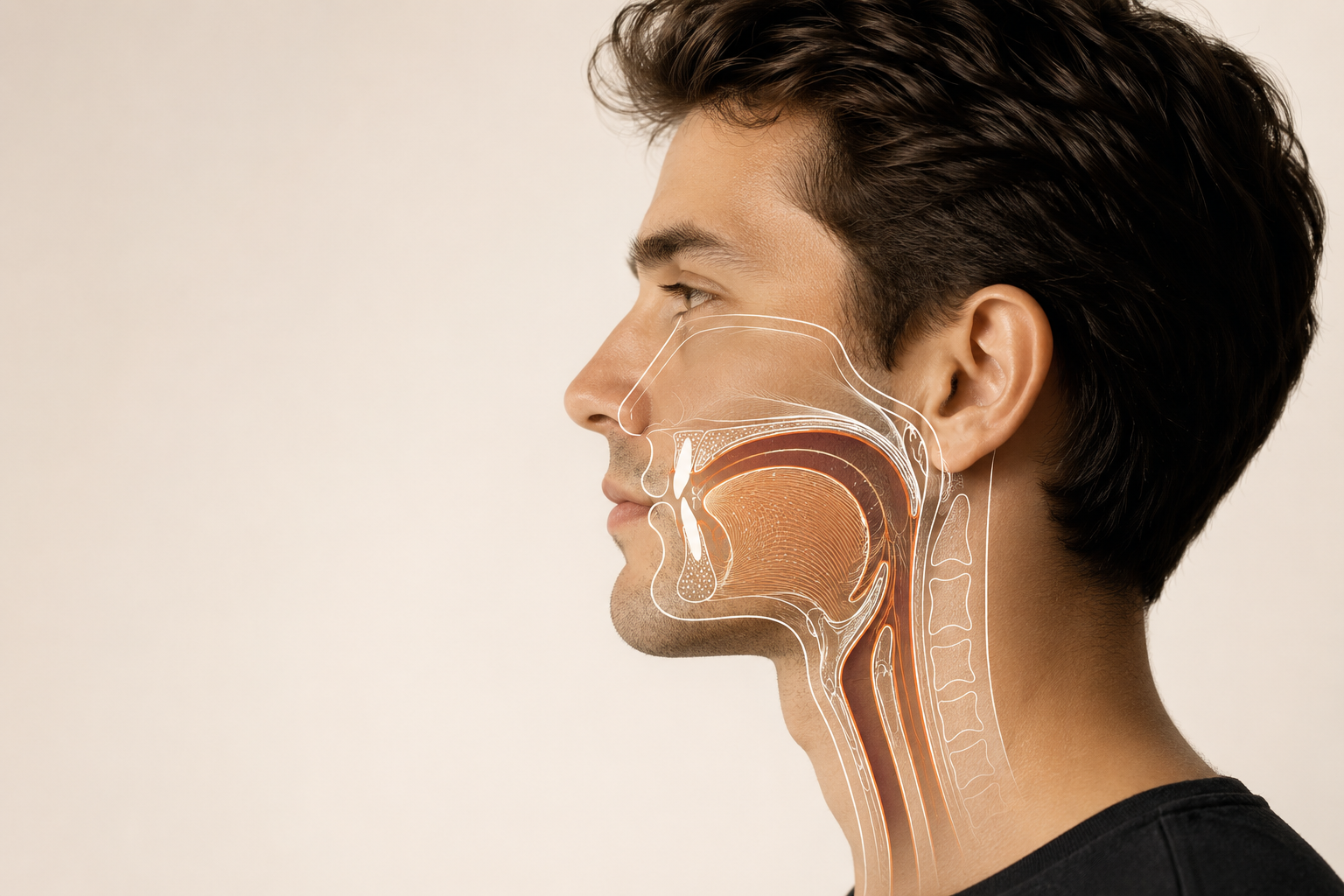
The tongue is the largest muscle group in your head and neck — about ten muscles working in concert. When it settles into the correct default position (sometimes called palate contact or the nasal-diaphragmatic breathing posture), three things are happening at once:
- The tip of the tongue rests lightly on the incisive papilla — the small ridge behind your front teeth, not on the teeth themselves.
- The middle and back of the tongue suction lightly against the hard palate, sealing the oral cavity.
- Lips gently closed, teeth slightly apart. No clenching. No pressing.
When this positioning holds, the tongue functions like an internal scaffold. It keeps the airway open by pulling the base of the tongue forward. It presses laterally on the palate, encouraging the arch to develop and stay wide. It stabilizes the jaw so it doesn't drift into clenching or open-mouth patterns. And it facilitates nasal breathing by sealing the oral cavity above.
When the tongue rests on the floor of the mouth instead — and for most adults, it does — those four functions collapse. The palate narrows. The airway compensates. The jaw picks up work it wasn't designed to do. And breathing shifts to the mouth by default, which over time reshapes the entire respiratory pattern.
Tongue posture is habit. Habits are built by repetition. The tongue was doing something before you started paying attention to it — and it'll keep doing that until you retrain it.
Signs Your Tongue Posture Is Off
Most people never think about their tongue until something else starts showing up — jaw pain, sleep issues, a speech quirk their kid's SLP flagged. If any of these are familiar, the underlying pattern is probably tongue posture.
Mouth open at rest.
Lips parted when you're not talking. Mouth open during sleep. That's a resting posture pattern, not a personality trait.
Jaw tension or TMJ pain.
Clenching in the afternoon. Headaches by 3pm. Popping or clicking when you open wide. The jaw compensates for a tongue that isn't holding its share.
Mouth breathing at night.
Dry mouth in the morning. Snoring. Restless sleep. Nasal breathing collapses first when tongue posture is off.
Narrow palate, crowded teeth, /r/ or /s/ drag.
In kids: the SLP flags a lisp or a tongue thrust. In adults: post-orthodontic relapse, teeth shifting back. Same root — tongue on the floor.
The Five Systems Tongue Posture Runs
Tongue posture doesn't stay local. When it's correct, five downstream systems get a quiet lift. When it's off, all five compensate — and one of them is probably why you found this page.
1. Airway and nasal breathing
When the tongue seals against the palate, the base of the tongue pulls forward and the airway stays open. Nasal breathing becomes the default because the oral cavity is closed above. When the tongue drops to the floor, the airway narrows and the body compensates with mouth breathing — day and night. That single shift affects CO2 tolerance, sleep depth, immune response, and how tired you feel by afternoon. Deep-dive on mouth breathing here.
2. Palate development and dental alignment
In children, the tongue is what widens the palate outward as it grows. A tongue that lives on the floor of the mouth can't do that job — the palate stays narrow, teeth crowd, and orthodontic work becomes necessary later. In adults, tongue posture is why post-braces retention fails; the same pattern that caused the crowding still runs the mouth. Read on tongue posture in kids →
3. Jaw stability and TMJ
The temporomandibular joint is designed to hinge — not to carry postural load. When the tongue isn't stabilizing the palate, the jaw picks up the work: clenching, bracing, drifting. Over years, that shows up as TMJ pain, popping, jaw fatigue, and afternoon headaches. Complete guide to TMJ and jaw pain →
4. Speech articulation
The tongue is the muscle that produces most consonants — /r/, /s/, /l/, /t/, /d/, /n/, /th/. When resting posture is off, muscle memory for those articulation points is off with it. That's why so many speech delays in children trace back to tongue thrust or low tongue posture. It's also why adult speech feels more effortful under fatigue than it used to. On speech and confidence →
5. Postural chain — from tongue to spine
The tongue is the top of a fascial chain that runs down through the hyoid, throat, and chest into the pelvis and legs. When the tongue drops, head-forward posture follows. Head-forward posture pulls the shoulders in, compresses the ribs, and shortens the front line. This is why physical therapists working on posture increasingly look up at the tongue. From lips to hips — the postural chain →
How To Fix Tongue Posture
Retraining tongue posture is habit change, not a hack. The tongue has been doing what it's been doing for years — you don't force it into a new pattern in an afternoon. But the mechanics are simple, and consistency compounds fast.
Step 1 — Awareness.
Right now, without moving anything, notice where your tongue is. Floor of the mouth? Pressing against your teeth? Somewhere in between? That's your baseline. Most people are surprised — they've never checked. Repeat this check five times a day for a week and you'll start catching your tongue in the wrong position automatically.
Step 2 — Manual repositioning.
Suction the tongue against the roof of your mouth. Tip behind (not touching) the front teeth. Hold for twenty seconds. Release. Repeat five times, three times a day. This isn't a workout — it's teaching your nervous system a target.
Step 3 — Guided exercises.
Tongue clicks, palate presses, and articulation drills strengthen the muscle so it can actually hold the new position. Two to five minutes a day is enough. See five tongue exercises for clear communication and practical articulation exercises for specific drills.
Step 4 — A physical target.
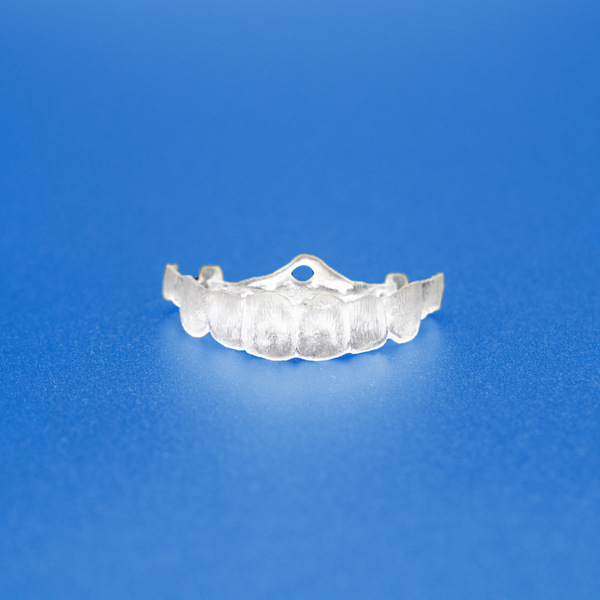
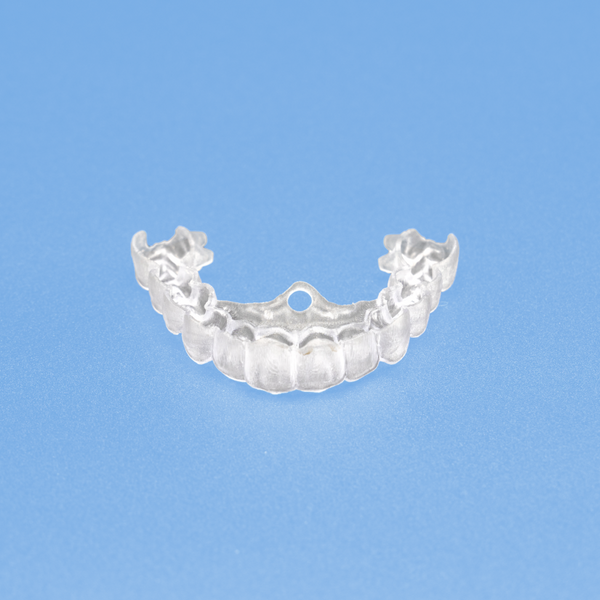
This is where Spot Pal comes in. It's a patented custom-fit tongue training appliance with a tactile cue — a physical landmark for the tongue to lock against. Two to five minutes a day of guided use, and the muscle re-patterns from there. Awareness and exercises can get you there; Spot Pal gets you there faster because the tongue has an unmistakable target instead of an abstract instruction.
Ready to train? The Adult Spot Pal ships with a custom-fit kit and a guided video program. Two to five minutes a day, 30-Night Trial.
Shop Adult Spot Pal · $229Mewing vs Tongue Posture — What's Real
Mewing is the viral name for a specific tongue-to-palate posture practice, popularized online in the last decade. The name comes from Dr. John Mew, the British orthodontist who developed the underlying idea before it went viral. It's the same core mechanic this guide has been describing: tongue against the palate, mouth closed, breathing through the nose.
Where the science supports it: tongue posture does shape palate development in growing children, and it does support airway and jaw stability across all ages. Peer-reviewed research on myofunctional therapy for children with narrow palates and speech delays is well-established.
Where the internet oversold it: dramatic "adult facial restructuring" claims — sharper jawlines in weeks, cheekbones on demand — are not supported by clinical evidence. Adult bones don't restructure that way. What adults can get from proper tongue posture is real but less flashy: less jaw tension, better nasal breathing, improved speech articulation, and stopping the drift of teeth back into crowding after braces.
Spot Pal isn't mewing. It's a patented, custom-fit device that gives the tongue a structured target — the kind of tool a dentist or SLP can actually endorse, not a viral technique with mixed evidence.
"I didn't know 'tongue posture' was a thing until my ortho mentioned it. I'd been chalking up my jaw pain, afternoon fatigue, and shallow sleep to age and stress. Six weeks with Spot Pal and it turns out those weren't three separate problems — they were one problem. My tongue was on the floor of my mouth twenty hours a day. Once it wasn't, everything else quieted down."
Pick The Right Spot Pal


Common Questions
What is tongue posture, exactly?
Tongue posture is where your tongue rests when your mouth is closed and you're not talking, chewing, or swallowing. Proper tongue posture is: tip behind (not touching) the front teeth, the middle and back of the tongue suctioned against the palate, lips closed, teeth slightly apart.
Can adults actually fix tongue posture?
Yes. Adult tongue posture is a habit maintained by muscle memory — habits are trainable at any age. Palate development itself is fixed by adulthood, but the downstream effects (jaw tension, mouth breathing, forward posture, speech clarity, sleep quality) all improve when tongue posture is retrained.
How long does retraining take?
Most adults report tongue-posture awareness inside two weeks and reduced jaw tension by week four with consistent daily practice. Full habit change — where the correct position is your default without thinking — usually takes eight to twelve weeks.
Is mewing the same as tongue posture training?
The core mechanic is the same — tongue against the palate. What's different is the claims. Mewing videos often promise dramatic adult facial restructuring, which isn't supported by clinical evidence. Tongue posture training as a therapeutic practice focuses on the real, documented benefits: airway support, jaw stability, palate development in children, and speech articulation.
Do I need a dentist or SLP to work on tongue posture?
No — the basics are trainable at home with awareness, manual repositioning, and daily exercises. That said, if you have TMJ pain, a diagnosed speech delay, an in-progress orthodontic case, or airway concerns during sleep, work with a professional in parallel. Spot Pal integrates cleanly into existing myofunctional therapy plans.
How does Spot Pal help specifically?
Awareness and exercises get most people to correct tongue posture eventually. Spot Pal shortens the timeline. It's a patented, custom-fit device that gives the tongue an unmistakable physical target — a tactile cue against the palate. Two to five minutes a day of guided use, and the muscle re-patterns from there. 30-Night Trial.
Share:
Nasal Breathing Under Load. Or You Gas Out.
Mouth Breathing: The Complete Guide