

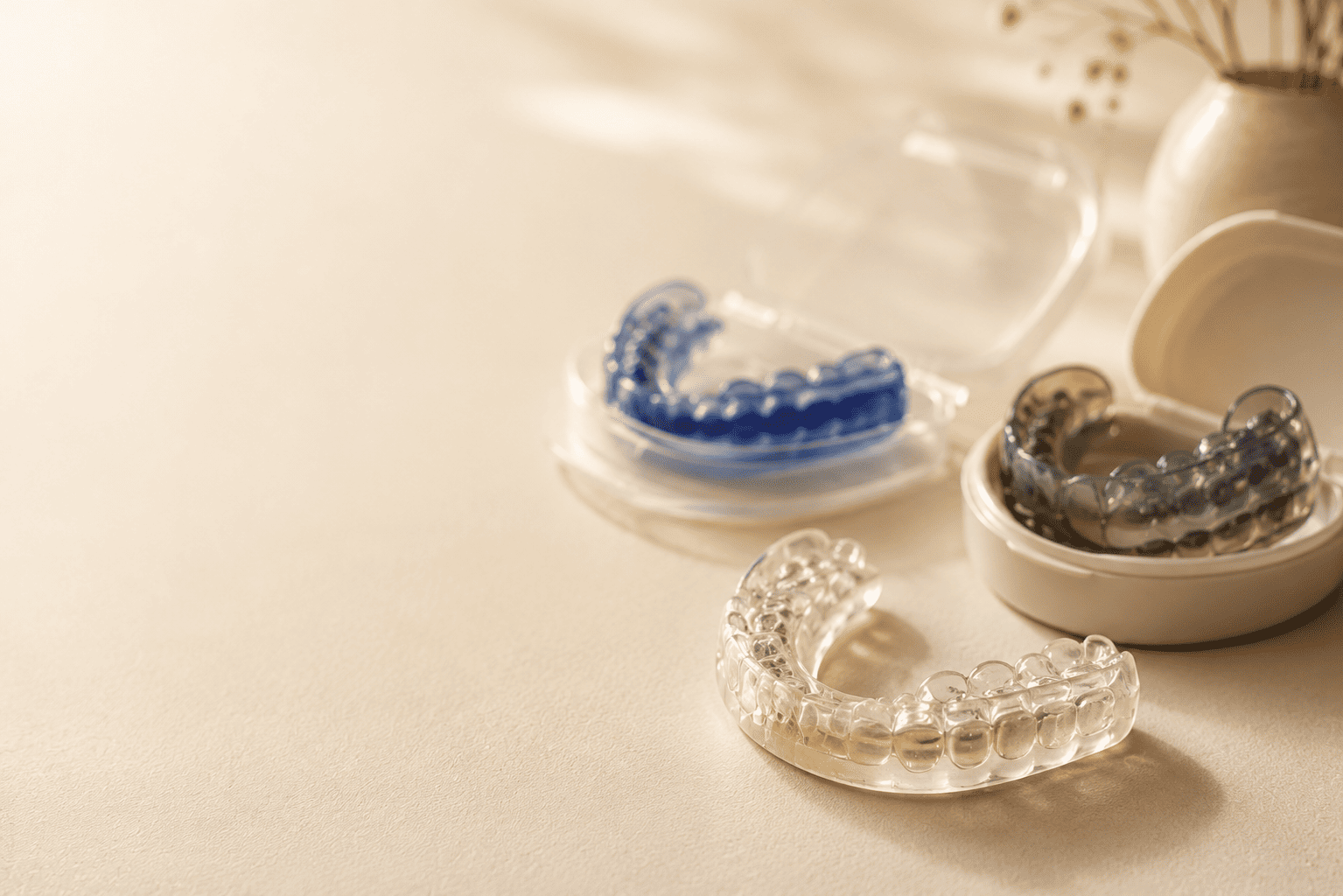
Three nightguards in three years. Still waking up with headaches, still tight in the temples, still feeling like your jaw is holding load it shouldn't. If you've cycled through appliances without meaningful resolution, the appliances are not the problem. What they were prescribed to buffer is still firing, upstream, every single night.
Here's what the appliance-only protocol misses about chronic bruxism, and the patented daytime layer that actually addresses the cause.

What Nightguards Actually Do (And Don't Do)
A custom-fit nightguard is doing exactly what it was designed to do — protect your teeth from the mechanical damage of active bruxism. Enamel wear, dental fracture, cusp attrition. Without a guard, chronic grinders end up with expensive dental work. The appliance is genuinely load-bearing on that front.
What it does not do — and was not designed to do — is address the reason your jaw is clenching in the first place. Bruxism is a motor pattern generated by the nervous system, often in response to airway compromise. The guard changes the surface the pattern acts on. It doesn't change the pattern.
That's why you can cycle through three custom guards, keep your teeth safe, and still wake up with the same headaches, same tight temples, same morning fatigue. The teeth are protected. The pattern is untouched. Full TMJ pillar →
Why The Pattern Keeps Firing
The most common driver of chronic bruxism in adults isn't stress — it's airway compensation. Here's the sequence most patients don't know:
- The tongue-palate seal breaks during sleep. If your resting tongue posture is low (in the floor of the mouth), sleep relaxes the muscles further and the tongue slides back into the pharyngeal airway.
- The airway narrows. That partial obstruction registers on your nervous system as a threat to breathing.
- Your jaw clenches forward as a protective reflex. Recruiting the jaw forward pulls the tongue forward with it, temporarily re-opening the airway.
- The cycle repeats. All night. Hundreds of micro-clench events per night in chronic cases.
The nightguard sits between your teeth, catching the forces. It doesn't stop your jaw from firing that reflex. The reflex is the mechanism. The tongue posture that lets the airway collapse in the first place is what's upstream of the reflex. Mouth breathing pillar →
The Missing Layer — Daytime Rest Posture
If sleep bruxism is an airway-driven reflex, and airway compromise starts with low tongue posture, then the intervention that actually addresses the driver is upstream: retrain the resting tongue position during the day so the tongue-palate seal holds automatically at night.
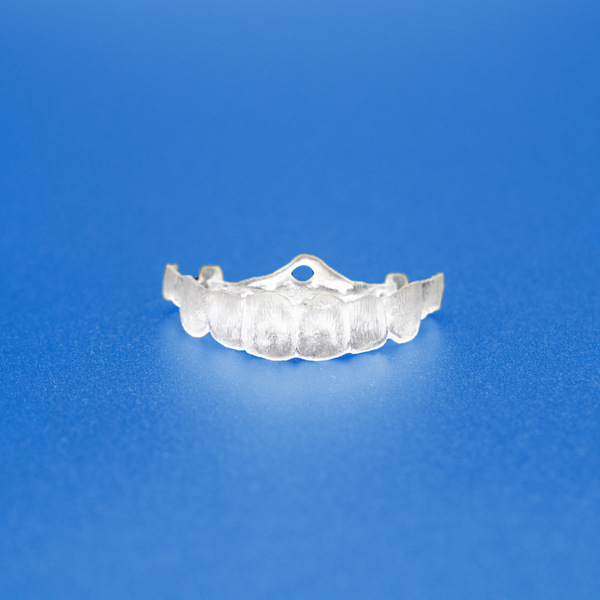
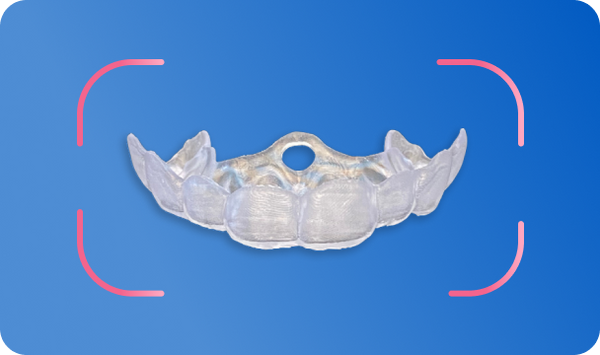
This is what Adult Spot Pal is designed for. It's a patented daytime resting-posture appliance — not a nightguard replacement, not something you wear to bed. You wear it 30-60 minutes at a stretch during focused work: reading, screen time, deep work, meetings. It provides a tactile "spot" for the tongue to home against passively, without conscious concentration. Over 6-12 weeks the pattern consolidates into an autonomous rest position that persists into sleep.
You keep the nightguard for tooth protection. You add the daytime layer for pattern retraining. Two devices, two jobs, working the same mechanism from two ends. Tongue posture pillar →
Signs Your Nightguard Alone Won't Resolve It
Not every nightguard case needs the daytime layer. If your grinding was situational — a stressful period at work, a life event — and your morning symptoms resolved when the guard came in, you may be fine. The layered protocol is for the cases below.
You've had two or more nightguards in three years.
Cycling through appliances is the signal that the pattern is chronic and airway-driven, not situational.
Morning headaches persist despite the guard.
The guard buffers dental damage but doesn't stop the muscular clench that produces headaches.
Dry mouth or snoring alongside the grinding.
Both signal mouth-open sleep and airway involvement. The clench is protecting an airway that's partially closing.
You catch yourself clenching during the day.
Daytime clench is the same tongue-posture pattern running while awake. Guarantees the nighttime pattern is entrenched.
"Third nightguard in two years. Still headaches four days a week. My dentist finally said 'this isn't a nightguard problem, this is a pattern problem' and put me on Adult Spot Pal during work hours. First month I noticed nothing. Second month my partner said I'd stopped grinding sounds at night. Fourth month my headaches were rare. Kept the nightguard the whole time — it was doing its job. Just needed the layer above it."
Common Questions
Do I stop wearing my nightguard when I start Adult Spot Pal?
No — keep the nightguard. It's protecting your teeth from active grinding while the rest-posture retraining is emerging. Discontinuing the nightguard is a decision to make with your dentist only after sustained reduction in bruxism markers (typically 6-12 months). The two devices work together, not interchangeably.
How long before headaches quiet down?
Most patients report awareness of daytime rest-posture change within 2-3 weeks. Morning symptom reduction typically emerges at 6-10 weeks. Full pattern consolidation usually settles at 3-6 months. Individual variation is significant depending on how long the pattern has been running.
Should I get a sleep study?
If any of these apply, yes: severe snoring, witnessed pauses in breathing, gasping/choking waking, daytime sleepiness affecting safety, or morning headaches that don't respond to a layered protocol over 3-4 months. The myofunctional layer is complementary to medical sleep evaluation, not a substitute for it. Bring these signs to your primary care physician.
Is this covered by insurance?
Adult Spot Pal is typically an out-of-pocket purchase. Some HSA/FSA plans cover myofunctional appliances — check with your administrator. Related myofunctional therapy visits with an SLP or myofunctional therapist may be partially covered depending on plan and coding.
Do I need to see a myofunctional therapist first?
Recommended but not required. A myofunctional therapist can confirm the mechanism fits your case, rule out other drivers (tongue tie, structural airway issues), and structure the practice pattern. Adult Spot Pal ships with a video program if you're starting on your own. If you're not seeing progress at 8-12 weeks, professional guidance often unlocks it.

Share:
CO2 Tolerance Training: What Endurance Athletes Miss
Kids Who Sleep With Their Mouth Open — What To Do