

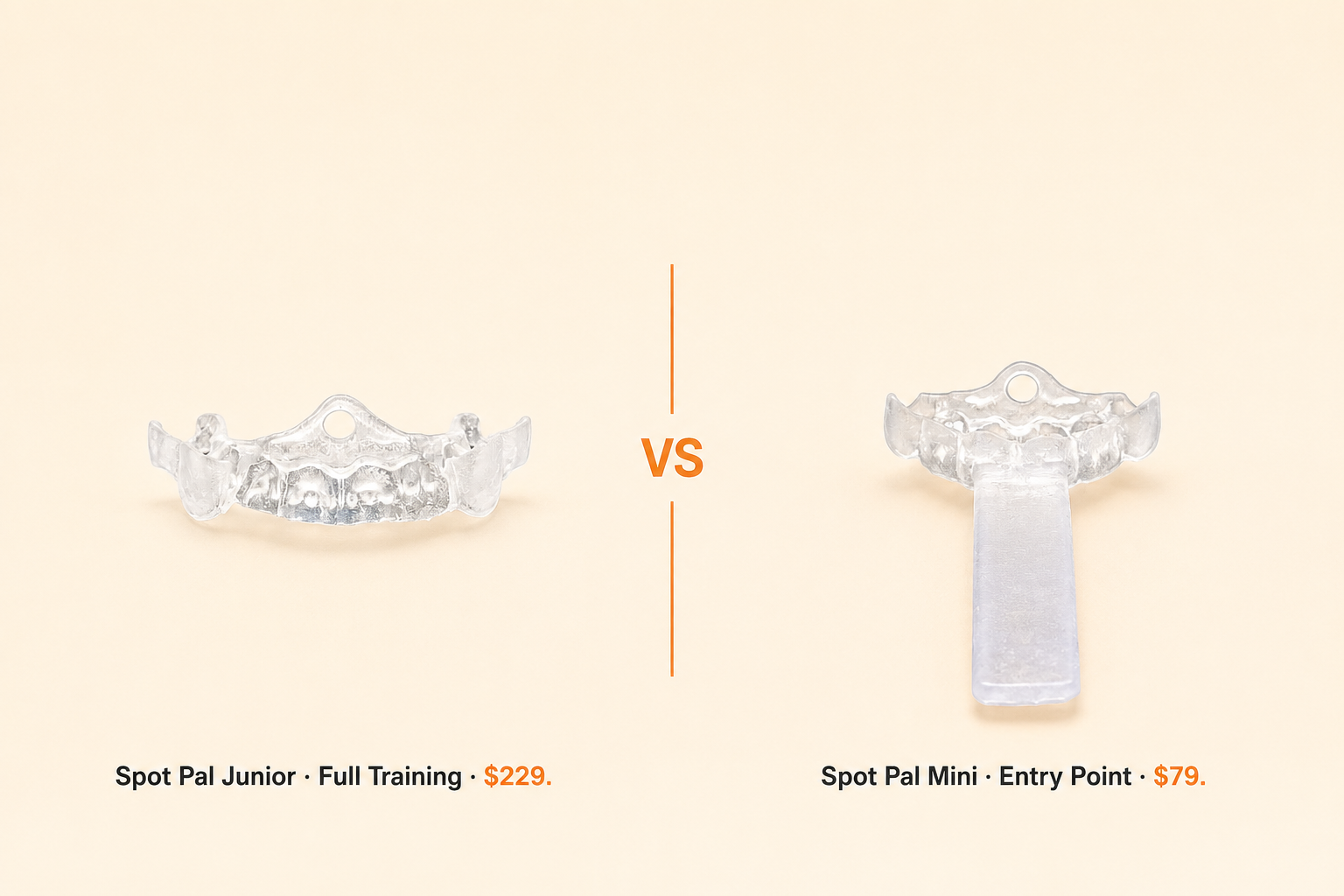
Spot Pal Junior and Spot Pal Mini both fit ages 5-12. They both train resting tongue posture. They both ship with a video program. What's different is depth of protocol, case fit, and family cost commitment — and picking the right one depends on where your child is.
Here's a direct comparison, a decision framework, and the cases where each device is the right first step.

The Short Version
Spot Pal Junior · $229
Best for: full myofunctional protocol — kids with a clear picture of speech, swallow, and airway together, referred by an SLP or myofunctional therapist.
Ships with: patented resting-posture appliance + comprehensive video training program.
Spot Pal Mini · $79
Best for: entry-level exploration — milder cases, family cost sensitivity, or as a starter before committing to full training.
Ships with: patented entry-level appliance + core video program.
Full Comparison
Decision Framework
Choose Spot Pal Junior if:
- An SLP or myofunctional therapist has evaluated and recommended full protocol.
- Your child shows two or more markers (interdental /s/, mouth-open sleep, effortful eating, dental crowding, focus issues).
- You're coordinating with a pediatric dentist or orthodontist and want the full training device from day one.
- Your child is 7+ and the pattern is well-established — deeper protocol matches deeper habit.
- Post-adenotonsillectomy myofunctional adjunct — full training supports the habit reset. Kids sleep mouth-open →
Choose Spot Pal Mini if:
- You're not yet sure whether myofunctional work fits your child's case and want a lower-cost entry point.
- Your child has one clinical marker (mild lisp, occasional mouth-open sleep) but not the full picture.
- Family cost sensitivity — Mini is 65% less than Junior and validates the approach.
- Your child is younger (5-6) with mild presentation — starting gentler and progressing to Junior later works well.
- You've done the exercises with your SLP for weeks and want a passive-anchor supplement without full protocol. Practical exercises →
"My daughter's SLP suggested trying myofunctional work but I wasn't sold on the $229 for something I didn't understand. Bought Spot Pal Mini — she wore it during reading for six weeks. Her /s/ improved enough that I knew this was real. Upgraded to Junior for the full protocol and never looked back. The Mini paid for itself in confidence to keep going."
Kids-Parent Product Family


Common Questions
Can I start with Mini and upgrade to Junior later?
Yes — this is a common path. Many families start with Mini to validate the approach, then upgrade to Junior once they see progress and want the full protocol depth. The neuromuscular pattern built with Mini transfers to Junior.
Is Junior worth $150 more than Mini?
Depends on the case. For a child with a clear myofunctional picture — speech + swallow + airway markers together, especially SLP-referred — Junior's full protocol matches the depth of the case. For milder or unclear cases, Mini's lower entry cost lets you validate before committing. Neither is universally "worth more" — case fit determines value.
Do I still need a myofunctional therapist with either device?
Strongly recommended for both. A therapist confirms the mechanism fits your child's case, rules out other causes (tongue tie, structural issues), and structures the practice pattern. Both devices ship with video programs, but they complement clinical work — not replace assessment.
What if my child is under 5 or older than 12?
Under 5: work with a pediatric myofunctional therapist on exercise-based protocols first — age-appropriate at that stage. 13+: adolescents typically transition to Adult Spot Pal, though Junior may still fit smaller-frame teens. Coordinate with your therapist on device sizing.
How long before we see change with each?
Both devices produce rest-posture awareness in 2-4 weeks. Junior's fuller protocol tends to consolidate the pattern faster over 8-16 weeks. Mini's timeline is similar for mild cases; complex cases often reach a plateau where Junior's depth is needed to progress further.
Share:
Kids Who Sleep With Their Mouth Open — What To Do
From Lips to Hips: How Tongue Position Influences Your Whole Postural Chain