

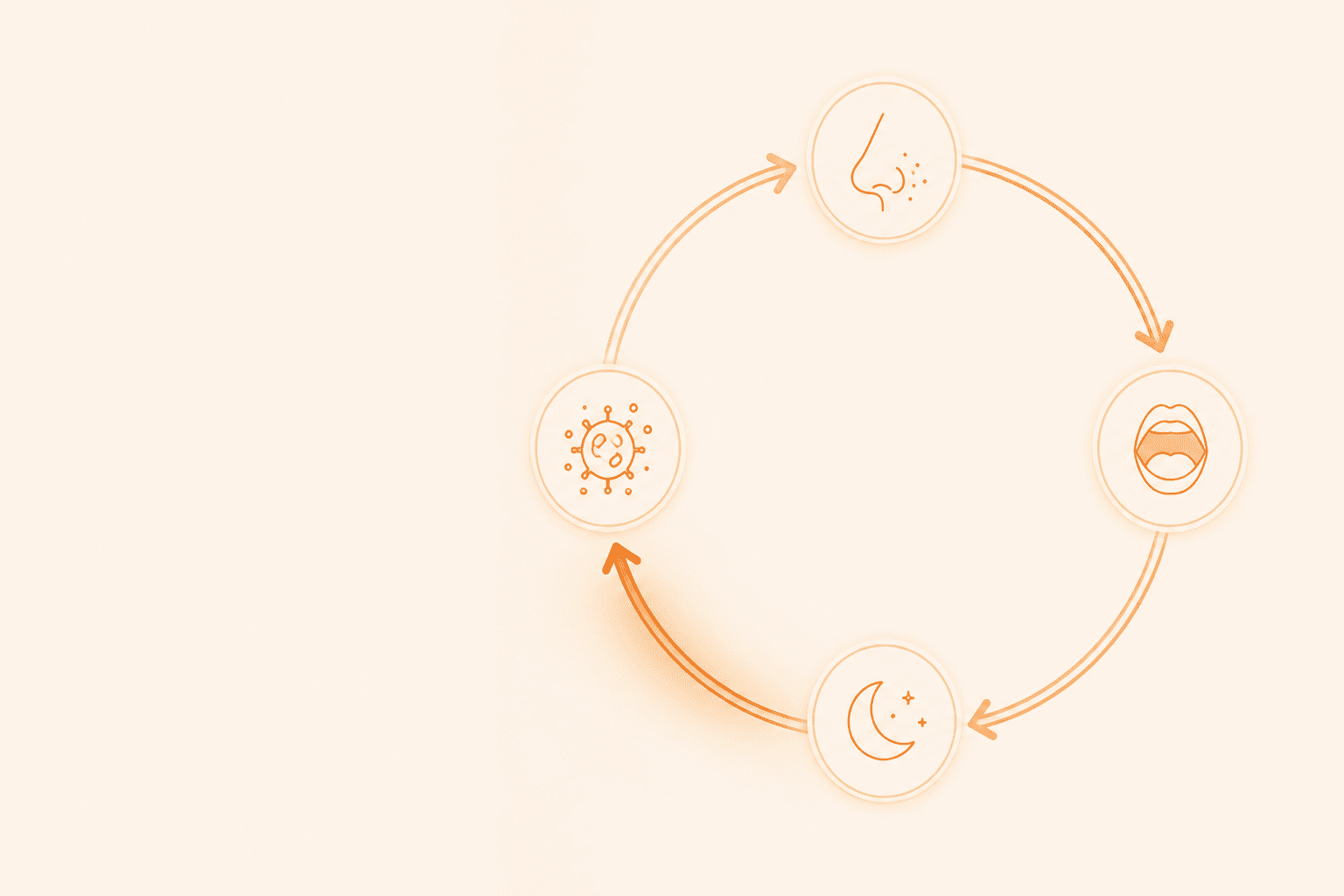
Chronic allergies do more than make you sneeze — they force you into mouth breathing as a workaround for a blocked nose. That workaround becomes a habit. The habit outlasts the allergy season and reshapes your sleep, jaw, and airway over years.
Here's how the allergy-to-mouth-breathing loop actually forms, and the protocol to break both sides simultaneously.

The Loop
Chronic nasal congestion from allergies forces mouth breathing. Mouth breathing dries the airway, promotes low tongue posture, and disrupts sleep. Poor sleep worsens immune-mediated inflammation, which amplifies the allergic response. Round and round — a self-reinforcing loop that's hard to break by treating just one side.
Breaking the loop requires addressing both simultaneously: the allergy driver AND the neuromuscular pattern that persists after the driver is treated. Mouth breathing pillar →
Six Signs You're In The Loop
Chronic nasal congestion.
Year-round or seasonal blockage forcing mouth breathing to compensate.
Morning dry mouth.
Reliable marker of mouth-open sleep.
Partner-reported snoring.
Airway compromise during sleep audible to others.
Fatigue despite adequate sleep.
8+ hours in bed, still tired. Recovery not landing.
Habitual mouth-open face.
Even outside allergy season, mouth-breathing default persists.
Morning jaw fatigue.
Compensatory clench from nighttime airway compromise.
Break Both Sides
1. Address the allergy driver.
ENT or allergist evaluation. Options include allergen avoidance, nasal irrigation, prescription steroid sprays, antihistamines, immunotherapy. Structural evaluation for deviated septum or turbinate hypertrophy. Physical airway unblocking is prerequisite.
2. Retrain the neuromuscular pattern.
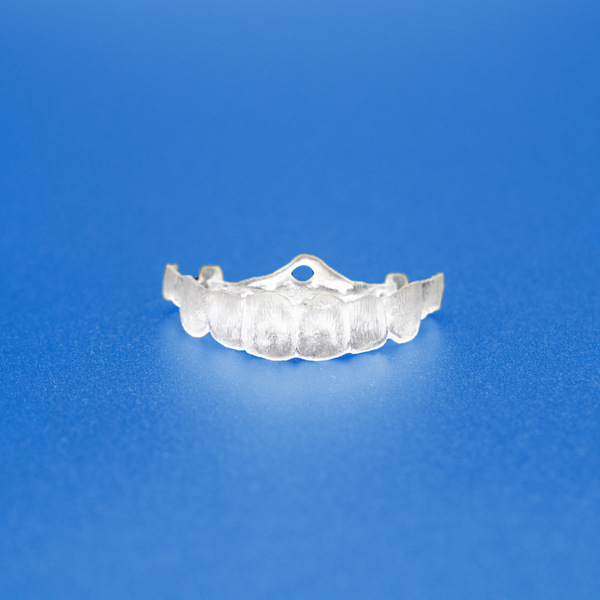
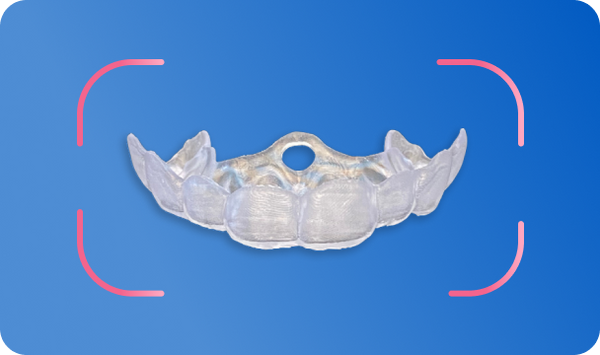
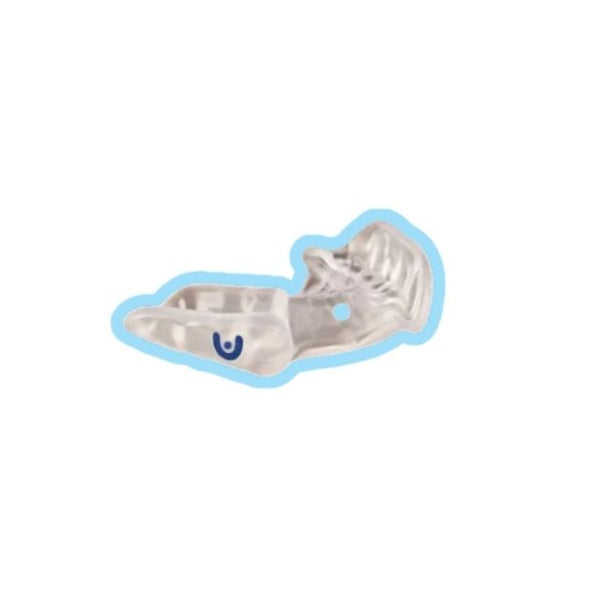
Adult Spot Pal during focused-work windows retrains tongue-palate seal and mouth-closure default. Once the allergy is resolved, this is what makes nasal breathing autonomous instead of dropping back to the old mouth-breathing habit. Tongue posture pillar →
3. Environmental hygiene.
HEPA filtration in bedroom, mattress + pillow allergen covers, weekly hot-water bedding wash, humidity 30-50%. Reduces the trigger load that keeps the loop firing.
4. Sleep-position & airway support.
Side-sleeping, head-of-bed elevation, nasal strips or saline rinse before bed. Small interventions that add up. Best sleep position for airway →
"Year-round allergies for a decade. Allergist got me on immunotherapy — nose finally cleared. But I was still mouth-breathing at night out of habit. Added Adult Spot Pal for the daytime substrate work. Three months later my partner said I stopped snoring for the first time in our marriage. The allergy fix wasn't enough on its own."
Break-The-Loop Stack
Common Questions
Do I need allergy meds to start tongue posture work?
If your nose is chronically blocked, address that first — you can't nasal-breathe through an obstructed nose. Once airflow is restored, tongue posture work becomes effective.
Will Adult Spot Pal help my allergies?
Not directly — but by reducing chronic mouth breathing and improving sleep quality, systemic inflammatory load decreases over time, which can indirectly reduce allergic reactivity.
What if my nose is blocked even without allergies?
Rule out structural causes — deviated septum, nasal valve collapse, chronic sinusitis. ENT evaluation warranted. Some cases need surgical or procedural intervention before myofunctional work can succeed.
Can kids have this loop?
Very common in kids — often paired with enlarged adenoids that further compound the mouth-breathing pattern. Pediatric ENT evaluation is the first step.
How long to fully break the loop?
Depends on how long it's been running. Adults with decades of the pattern typically see morning-symptom shifts in 6-10 weeks and full pattern autonomy at 3-6 months.
Share:
Focus Issues in Kids: When It's The Airway, Not ADHD
Adult Tongue Posture Beginner's Guide: Where to Start From Zero