

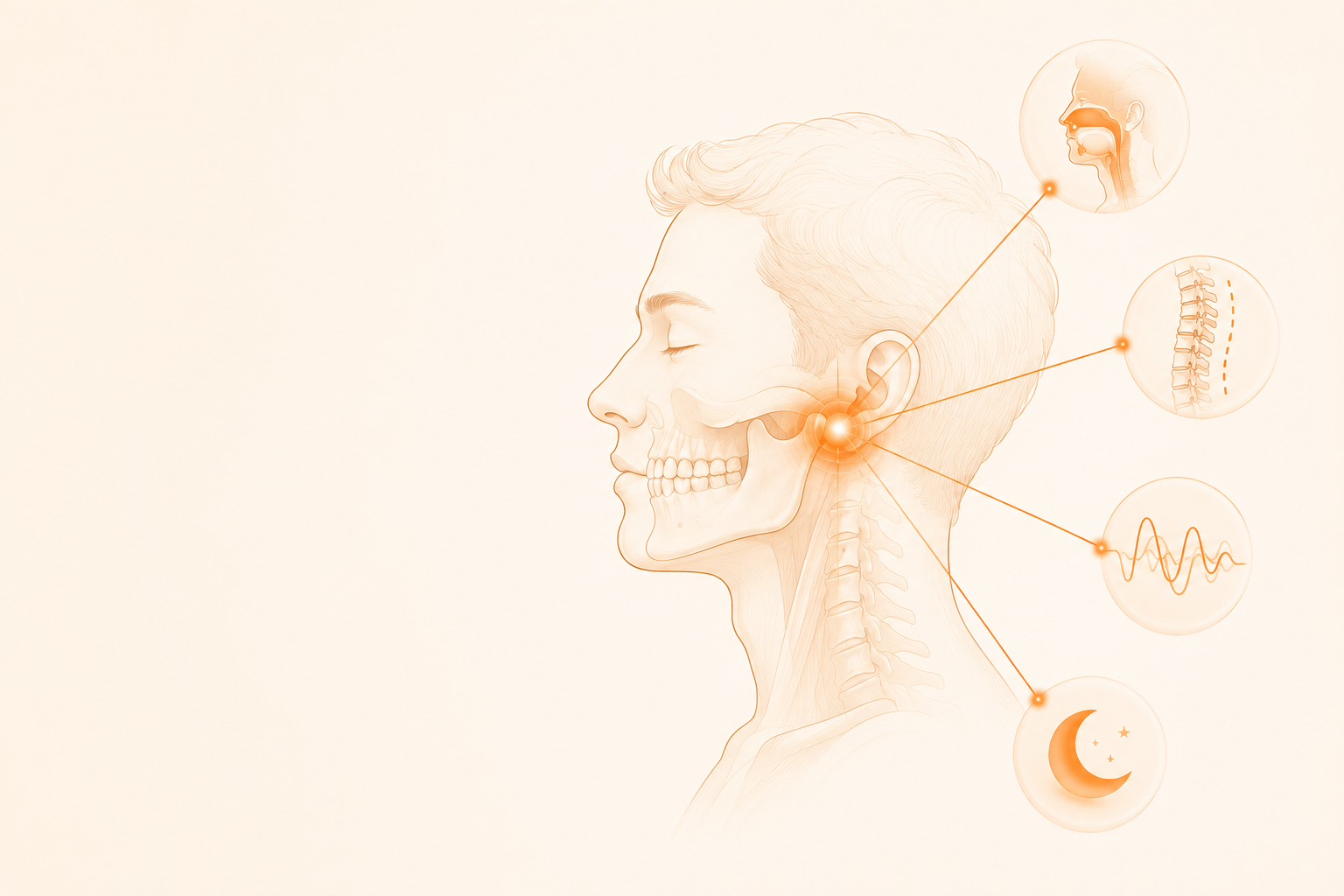
Your dentist calls it "stress." Your primary care calls it "a habit." Sleep-medicine research over the past two decades increasingly calls it something else — a protective brainstem-generated motor pattern, often responding to airway compromise. That distinction changes what actually resolves it.
Here's the mechanism behind chronic bruxism, the drivers most workups miss, and what a cause-directed protocol looks like versus buffering with a nightguard alone.

The "Stress Bruxism" Story — And Why It Falls Short
The conventional narrative: you're stressed at work, so you clench your teeth at night. Get a nightguard, manage the damage, ride out the stress. This is not wrong — stress does amplify bruxism. But it's incomplete.
In chronic cases — three-plus-nightguard cyclers, patients whose grinding continues through relatively calm life periods — the stress-only story doesn't account for what's actually driving the pattern. Two decades of sleep-medicine research has surfaced a different mechanism: sleep bruxism as a protective motor pattern, often triggered by airway compromise.
The sequence: airway partially collapses during sleep (tongue drops, palate hangs, jaw relaxes). Nervous system registers reduced airflow. Motor cortex activates the jaw musculature — masseter, pterygoids — pulling the mandible forward to re-open the airway. Repeat, all night, hundreds of micro-events per hour in chronic cases. TMJ pillar with full mechanism →
Six Real Drivers Of Chronic Bruxism
Airway compromise.
The most common upstream driver in adults. Mouth-open sleep + low tongue posture partially close the pharyngeal airway. Jaw clenches forward as protective compensation.
Low resting tongue posture.
Daytime substrate for the nighttime pattern. Adults whose tongues live in the floor of the mouth carry that pattern into sleep — and the airway comes with it.
Sleep-disordered breathing.
From mild positional apnea through moderate-to-severe OSA. Bruxism prevalence is significantly higher in sleep apnea populations. Sleep study warranted for severe cases.
GERD and reflux.
Nighttime acid reflux triggers swallowing and jaw activity as protective response. Chronic GERD sufferers have documented higher bruxism rates.
Stress + genetics amplifier.
Real but usually secondary. Stress increases the frequency and force of existing bruxism patterns. Genetics affects susceptibility. Neither is the mechanical driver.
Medications.
Certain classes (SSRIs, stimulants, some antipsychotics) have documented bruxism side effects. Worth reviewing with prescriber if new bruxism onset correlates with new prescription. Daily habits that worsen TMJ →
The Cause-Directed Protocol
Buffer-only care (nightguard) protects the teeth. It doesn't quiet the pattern. Here's the layered approach that addresses drivers upstream.
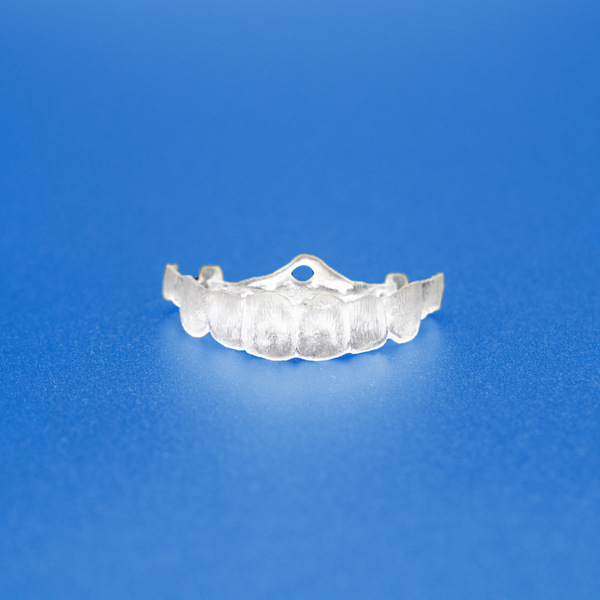
Layer 1 — Protect the teeth.
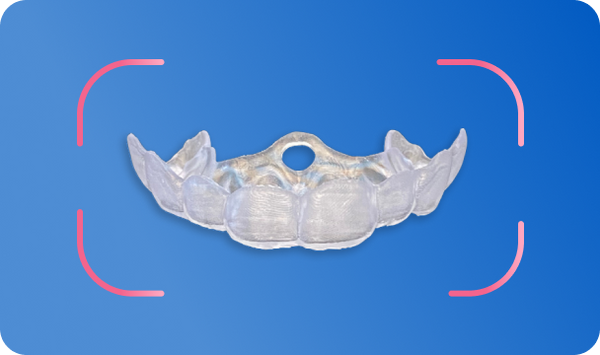
Custom-fit soft nightguard — Night Pal — for enamel protection while upstream work runs. Non-optional if active grinding is present.
Layer 2 — Retrain daytime tongue posture.
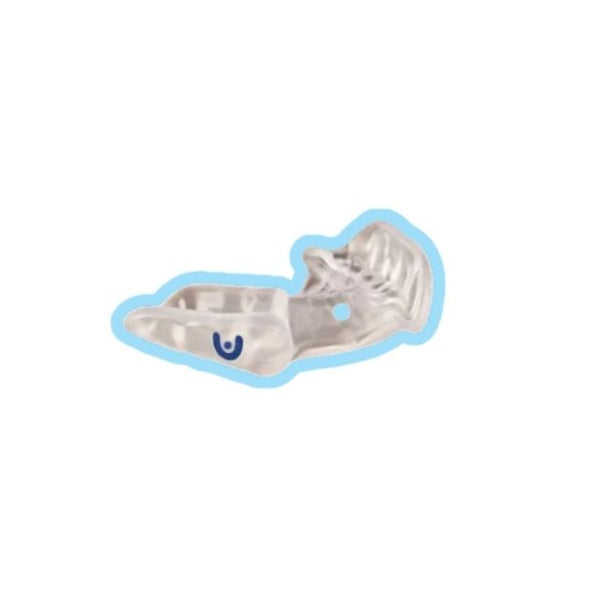
Patented Adult Spot Pal during focused-work hours. 30-60 minute stretches. Builds the tongue-palate seal that carries into sleep and reduces the airway compromise driving the reflex. Tongue posture pillar →
Layer 3 — Address the airway.
Nasal breathing retraining. Allergies, deviated septum, or chronic sinusitis evaluated. Sleep position optimization. If severe snoring or witnessed apneas — sleep study. Sleep & airway pillar →
Layer 4 — Reduce amplifiers.
Stress management (real but secondary). Alcohol reduction in the evening (documented bruxism amplifier). Caffeine cutoff by 2 PM. Screen curfew. These compound the layers above; they're not primary drivers on their own. Nightguard cycling guide →
"I've been diagnosed with 'stress bruxism' three times over ten years. Each time got a new nightguard, told to manage stress. Third one was worn through in 8 months. Sleep physician finally suggested airway evaluation — mild positional apnea. Fixed the tongue posture during the day, added side-sleeping, and the grinding sound my wife had lived with for a decade is just gone. Stress isn't magically fixed. The mechanism was different than we thought."
The Layered Bruxism Stack
Common Questions
Is bruxism always caused by airway issues?
No — it's the most common upstream driver in chronic adult cases but not the only one. GERD, certain medications, sleep disorders, and stress can all contribute. Cause-directed care starts with identifying which drivers apply to your case. A sleep physician and dentist trained in dental sleep medicine can both help sort this out.
Do I still need a nightguard if I'm doing myofunctional work?
Yes — during the retraining phase. Nightguard protects the teeth from active grinding while the upstream pattern is being retrained. Discontinuing is a decision to make with your dentist after sustained reduction in bruxism markers (typically 6-12 months minimum).
Should I get a sleep study for bruxism?
If bruxism is paired with severe snoring, witnessed apneas, gasping/choking awakenings, or daytime sleepiness affecting safety — yes. Also warranted if bruxism is worsening despite conservative care. Sleep physician determines whether polysomnography or home sleep test is appropriate.
Can kids have bruxism?
Yes — pediatric bruxism is often airway-driven (enlarged adenoids, allergies) and typically resolves when the airway issue is addressed. Early identification and treatment prevents downstream dental and craniofacial developmental impact. Pediatric dentist and ENT evaluation warranted for chronic cases.
How long before nighttime clench quiets?
Individual variation is significant. Most patients report partner-observed reduction in grinding sounds at 6-10 weeks of consistent daytime rest-posture work. Morning symptoms (headaches, jaw fatigue) typically shift at 8-16 weeks. Full pattern consolidation runs 3-6 months.
Share:
How Mouth Breathing Affects Sleep Quality & Overall Health
Adult /r/ Carryover: The Sound That Sticks Around