

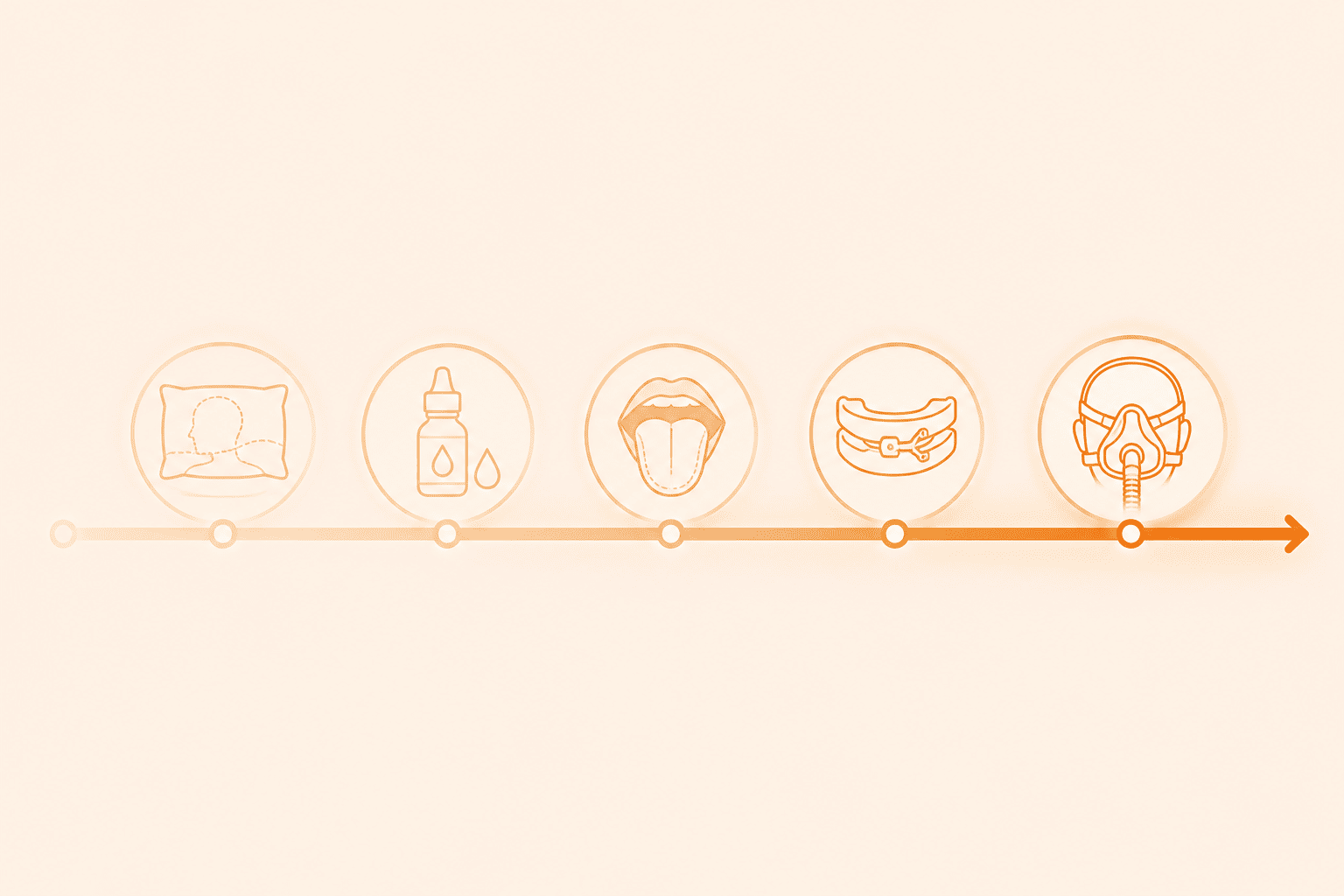
If your partner has been keeping earplugs on the nightstand, and CPAP feels like too much for a snoring problem, you're not alone. Between "annoying snore" and "moderate-to-severe sleep apnea" is a wide range of cases where CPAP is overkill — and other interventions can actually resolve the pattern.
Here's the full landscape of snoring solutions mapped to case fit, so you can have an informed conversation with your sleep physician about what actually fits you.

The Snoring Severity Spectrum
Snoring severity isn't binary. It's a spectrum from "occasional" to "medical emergency." Where you land determines which solutions fit.
- Occasional / positional snoring — only on your back, only after alcohol, or occasional. No daytime symptoms. Position + lifestyle usually resolves.
- Chronic mild snoring — nightly, partner-annoying, but no witnessed apneas or daytime sleepiness. Positional + myofunctional + possible sleep study.
- Mild-to-moderate obstructive sleep apnea (OSA) — diagnosed by sleep study, AHI 5-30. Options include CPAP, oral appliance, positional therapy, myofunctional adjunct. Sleep physician decides.
- Moderate-to-severe OSA — AHI 15+. CPAP is gold standard. Alternatives exist but require specialist coordination.
A sleep study is what places you on this spectrum. If you haven't had one and are dealing with more than occasional snoring, that's the first step. Sleep apnea treatment options →
The Full Options Table
Where Myofunctional + Spot Pal Fits
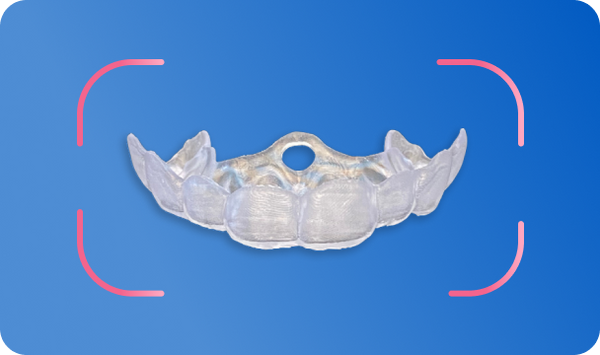
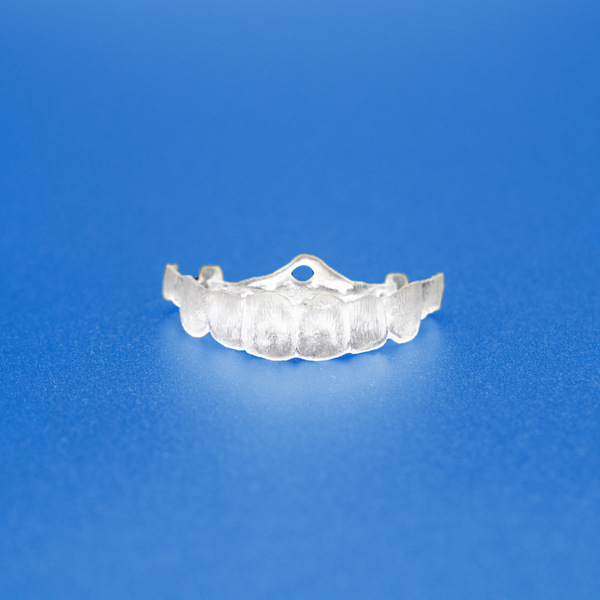
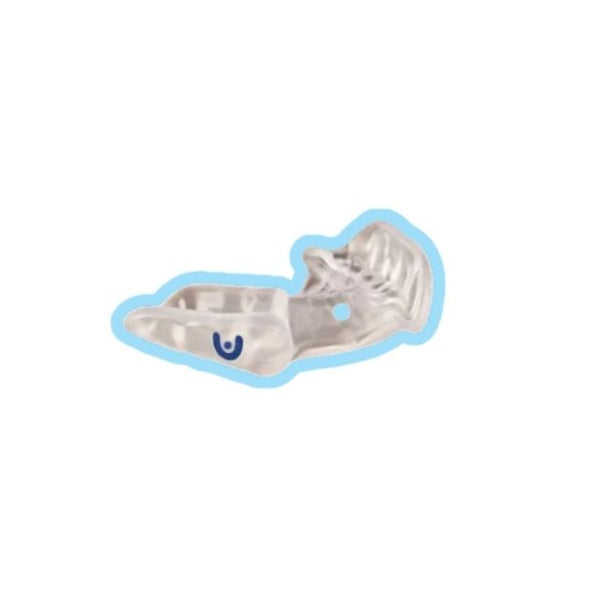
Myofunctional therapy — including patented resting-posture appliances like Adult Spot Pal — sits in the adjunct-and-mild-case category. Evidence base for mild-to-moderate OSA is documented; effect size is smaller than CPAP but meaningful. The value proposition is:
- Addresses the underlying tongue-posture substrate driving airway collapse.
- Complementary to CPAP, oral appliance, or positional therapy — not competitive.
- Reduces reliance on nightguard-only care for chronic bruxism paired with snoring.
- Improves general daytime jaw/breathing pattern (side benefit).
- Insurance not required, low downside risk. Mouth breathing pillar →
If you're already on CPAP and tolerating well — keep CPAP, add myofunctional as adjunct. If you're mild and CPAP-hesitant — discuss oral appliance + myofunctional with your sleep physician before assuming CPAP is required. Nightguard cycling →
"Diagnosed with mild OSA — AHI of 8. My sleep doctor said CPAP was gold standard but agreed to trial oral appliance + myofunctional therapy given how mild I was. Added Adult Spot Pal for the daytime posture piece. Repeat sleep study four months later — AHI down to 3. Not the right path for everyone, but for me and my sleep doctor it worked."
The Snoring Support Stack
Common Questions
Should I get a sleep study before trying anything?
If snoring is nightly, if there are witnessed apneas, if daytime sleepiness is safety-relevant — yes, sleep study first. If snoring is occasional and no other markers, positional therapy + lifestyle can be a reasonable first trial. If mild interventions don't resolve within 3 months, sleep study warranted.
Is myofunctional therapy an alternative to CPAP?
For moderate-to-severe OSA, no — CPAP is gold standard. For mild OSA, discuss with your sleep physician whether myofunctional-plus-oral-appliance is a reasonable initial trial. Effect size is smaller than CPAP but documented. Not universal.
What about mandibular advancement devices?
Prescribed by dentists trained in dental sleep medicine. Effective for mild-to-moderate OSA and often chosen when CPAP is not tolerated. Requires custom fitting and dental follow-up. Different device class from Night Pal (which is a bruxism guard, not a mandibular advancement device).
Will weight loss alone fix my snoring?
If weight is a significant contributor — often yes, at least partially. Documented dose-response between weight loss and AHI reduction in overweight OSA patients. Not a universal fix; some cases have structural drivers weight alone won't resolve.
What if my partner says I stopped breathing?
Witnessed apneas warrant urgent sleep study evaluation — this is a medical marker that isn't safely managed with over-the-counter or myofunctional-only approaches. See a sleep physician before starting any protocol.
Share:
Tongue Tie in Adults: The Diagnosis Nobody Made In Childhood
Botox vs Myofunctional Therapy For TMJ: When Each Actually Fits